Nanbu ironware
Nanbu ironware is cast iron made in Morioka and Oshu in Iwate Prefecture. Many people picture a heavy black kettle, but in Europe and America it is also known as the colourful teapots sold as “Nanbu Tekki”. Here is how two production areas with different histories came to share one name, and what makes Nanbu ironware distinctive.
Why ironware grew in Iwate
Nanbu ironware has two homes: Morioka and Mizusawa in Oshu. Morioka was the castle town of the Morioka (Nanbu) domain ruled by the Nanbu clan, while Mizusawa belonged to the Date clan. They had different rulers and different casting histories.
In Morioka, in the 17th century, the lord invited craftsmen from Yamanashi and Kyoto to start making ironware. A lord who was devoted to the tea ceremony had them make tea kettles, and that was the starting point of Morioka’s ironware. Domain patronage and the demand of the tea ceremony built the craft.
Casting in Mizusawa is older. It is said to date back about 900 years, to the late Heian period, when Fujiwara no Kiyohira of the Oshu Fujiwara clan invited casters from Omi (today’s Shiga). Mizusawa has long made everyday pots and pans.
From tea kettle to tetsubin
The tea kettles made in Morioka became famous across Japan as “Nanbu kama”. Later, a handle and spout were added so water could be boiled and poured more easily, and the tetsubin was born. With it, Nanbu ironware spread from tea masters into ordinary homes.
Casters made far more than pots and kettles: temple bells, Buddhist statues, lanterns and even cannons.
How two areas became “Nanbu ironware”
Ironware from Morioka and Mizusawa came to be known together as Nanbu ironware, and in 1975 it was designated a Traditional Craft of Japan. Today cast iron made anywhere in Iwate is broadly called Nanbu ironware.
The colourful teapots that went global
Abroad, Nanbu ironware is best known not for black kettles but for colourful teapots. They are called “Nambu Ironware” or simply “Nanbu Tekki”, and in European shops the name of Morioka maker Iwachu is widely recognised. Keeping traditional skills while embracing new colours and shapes is what made it popular overseas.
What makes Nanbu ironware distinctive
Nanbu ironware is cast. Moulds are made from sand mixed with clay, and iron melted at 1,400–1,500°C is poured in. Craftsmen do most of the more than 100 steps by hand, even adjusting the thickness for ease of use.
Kettles are finished with kamayaki, firing the inside over hot charcoal to form an oxide layer that resists rust. The surface changes as you use it, which is part of the pleasure.
A tetsubin and a kyusu are different things. A tetsubin is a kettle for boiling water over a flame; a kyusu is a teapot with an enamelled interior for brewing tea, and must never be put on a flame.
How to choose and care
Choose a tetsubin to boil water and a kyusu to brew tea. After using a tetsubin, let the remaining heat dry the inside to prevent rust. Leave the white mineral layer that forms inside, as it protects against rust. Never heat a kyusu directly, and dry it well after use.
Sources
MAKERS
Makers
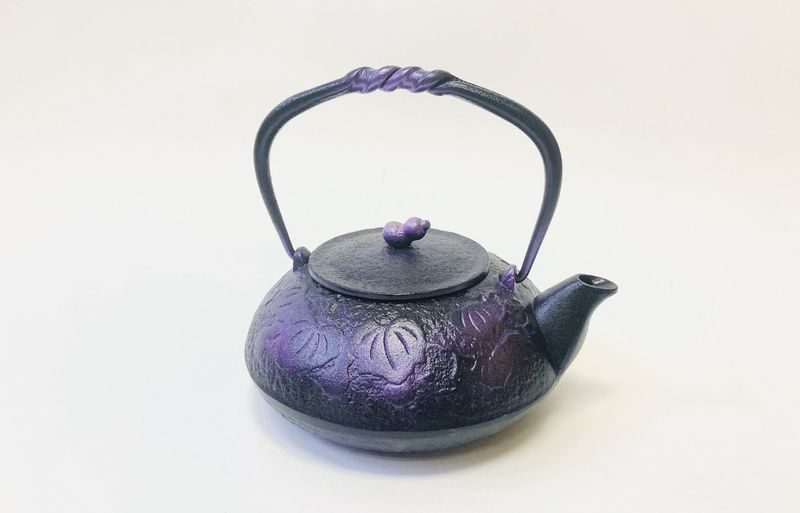 Oshu, IwateOITOMI及富Nanbu iron kettles
Founded in 1848, this Nambu ironware workshop makes cast-iron kettles and teapots.
WebsiteOnline shop ↗Ships overseas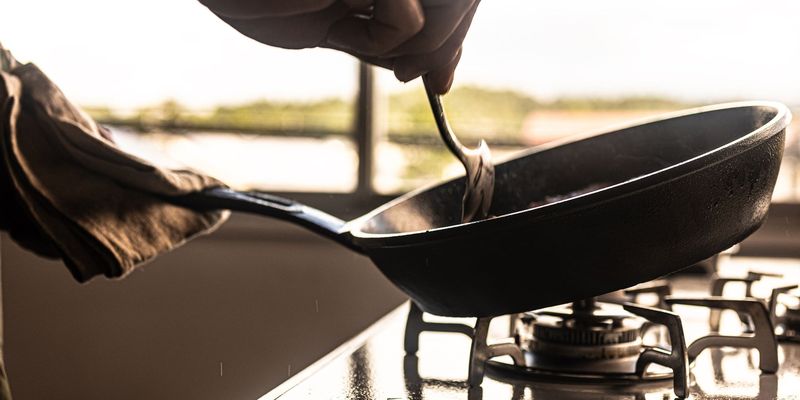 Oshu, IwateOIGEN及源鋳造 OIGENNanbu iron kettles and pans
Makes Nambu cast-iron kettles, frying pans, rice pots and grill pans for cooking.
Website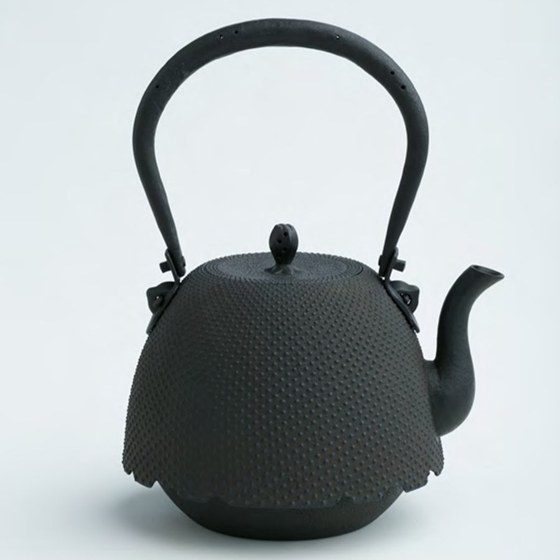 Morioka, IwateSuzuki Morihisa Studio鈴木盛久工房Nanbu iron kettles
A Morioka foundry making Nambu iron kettles, sake vessels, tea ceremony kettles and small iron objects.
WebsiteOnline shop ↗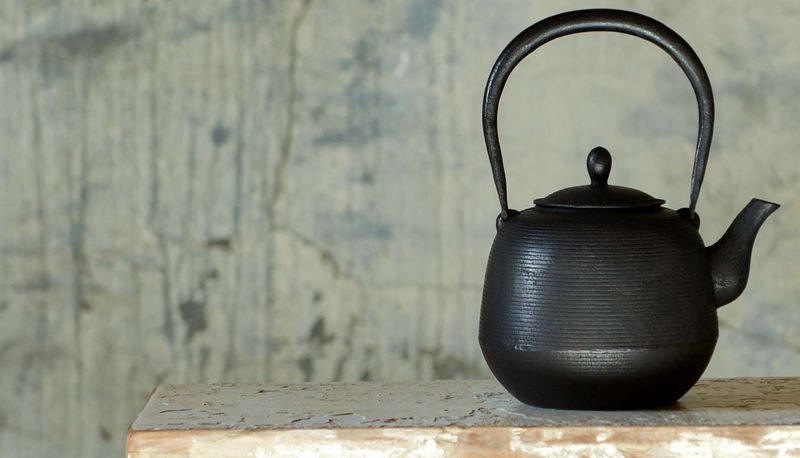 Morioka, IwateIWACHU岩鋳Nanbu iron cookware
Makes a wide range of Nambu cast ironware, from kettles and teapots to cookware and trivets.
Website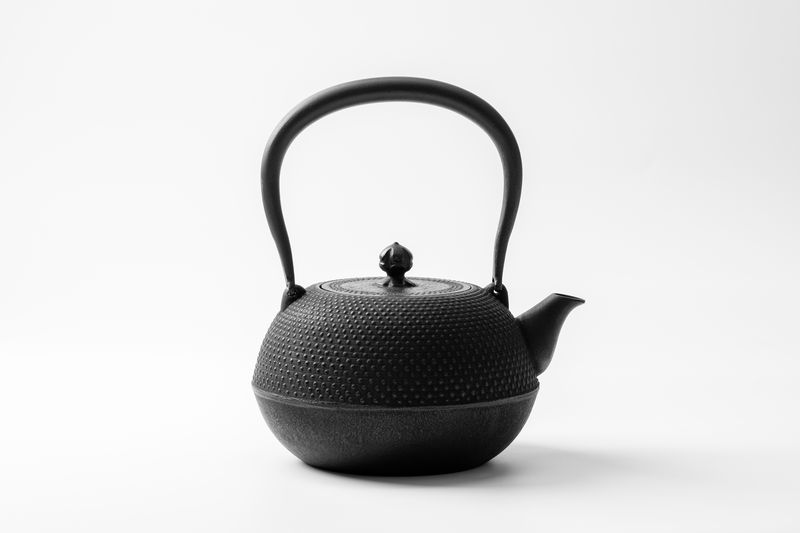 IwateTetsuchoku鐵直Iron homewares
Focuses on Nambu cast-iron kettles for boiling water and other practical iron household objects.
WebsiteFAQ
FAQ
Is my Nanbu tetsubin real? How can I tell?
Start with the inside. A kettle made for boiling water has a bare iron interior; a smooth enamel lining means it is an iron teapot (tetsu kyusu) that must not go on a flame. Then check for the workshop name, an origin of Morioka or Oshu in Iwate, and the Traditional Craft sticker. Some genuine pieces have no sticker, so the surest check is whether the same item appears in the workshop's official shop.
Are Nanbu tetsubin sold on Amazon or eBay genuine?
The seller is not always the workshop. Check that the listing names the workshop and the place of origin, then compare it with the workshop's own website. Paste the listing URL into our "Check a shop" tool to find the maker's official shop where we can.
Does water taste different from a tetsubin?
Many people find it softer. Since a tetsubin goes on the heat, check whether it works with induction hobs.
What if my kettle rusts?
Wipe exterior rust with a soft cloth. Light red rust inside is usually fine as long as the water stays clear; if in doubt, ask the maker.