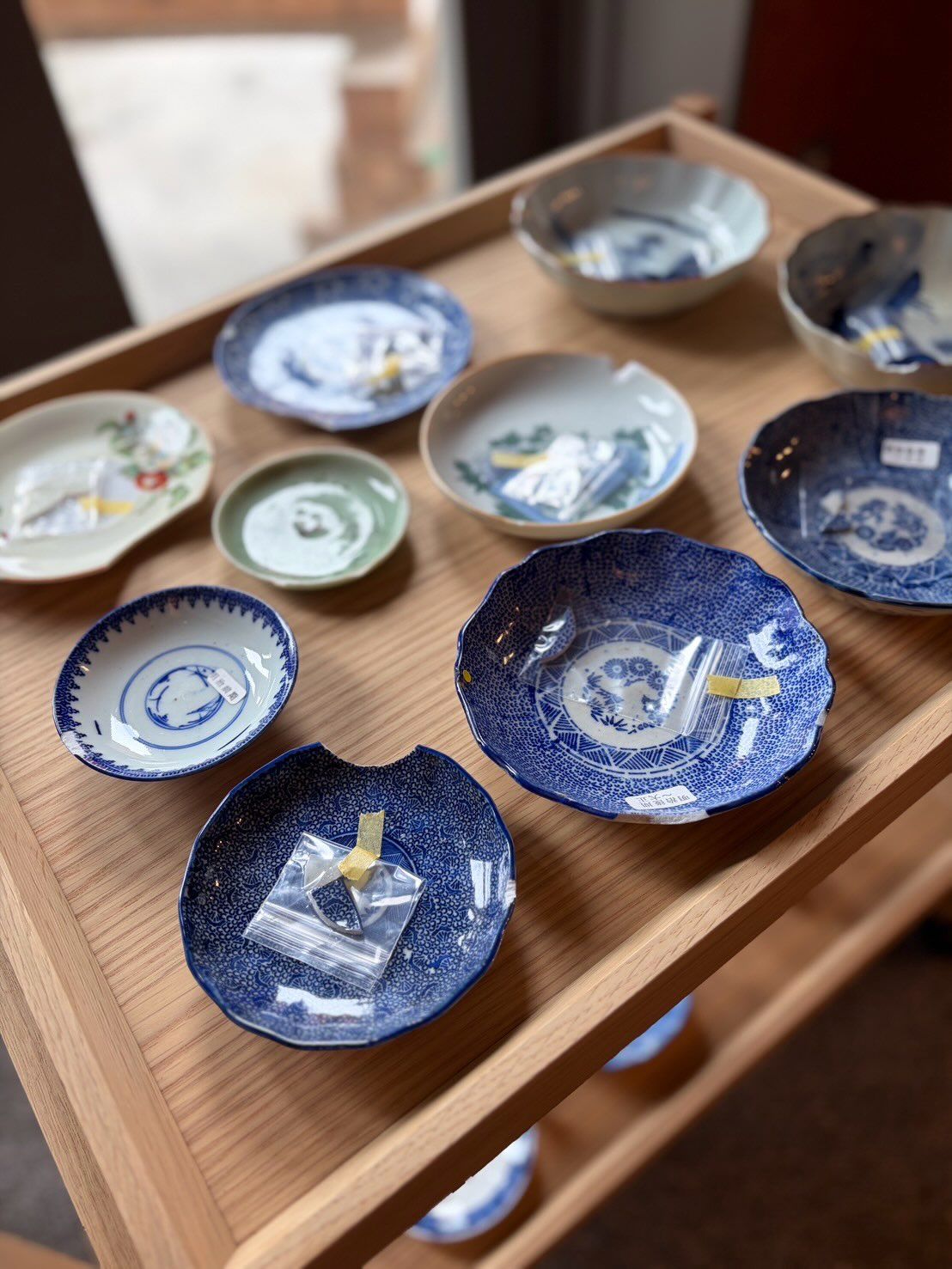
Arita ware
Arita ware is porcelain made in and around the town of Arita in Saga Prefecture. In the 1610s the raw material for porcelain was found here, and Japan fired its first porcelain. For more than 400 years since, Arita has remained the heart of Japanese porcelain. Here is how white, hard porcelain came to be born in a small valley town and reach the palaces of Europe: its history, why it grew here, and what makes it distinctive.
Why porcelain began in Arita
There are four main reasons. The first is people. In the late 16th century, after Toyotomi Hideyoshi’s invasions of Korea, the lords of Hizen (today’s Saga and Nagasaki prefectures) brought Korean potters back with them. By the 1590s many of these potters had kilns of their own across Hizen.
The second is raw material. In the 1610s porcelain stone was discovered in Arita. In 1616, according to tradition, the Korean potter Kanagae Sanbei (Yi Sam-pyeong) found a large deposit at Izumiyama, on the east side of town. The stone could be mined in quantity and was rich in the quartz and sericite that porcelain needs.
The third is fuel and water. Firing porcelain takes enormous amounts of wood, which the surrounding mountains supplied. Rivers in the valley turned water-powered hammers that crushed the stone into powder.
The fourth is the domain. Realising porcelain could make money, the Saga domain managed and protected Arita’s kilns, guarding the only road in to keep the technique from leaking out.
From 1616: the beginning of Japanese porcelain
In 1637 the Saga domain concentrated porcelain production in the east of town, near Izumiyama. Kilns were built on steep valley slopes beside the quarry, and wooden hammers driven by river water crushed the stone, which was mixed with water to make porcelain clay. The Izumiyama quarry, said to have turned a whole mountain into tableware over 400 years, became a National Historic Site in 1980.
Early Arita ware was mostly sometsuke: blue designs painted in cobalt on a white body under a clear glaze. In the 1640s local potters learned Chinese overglaze techniques, and Japan’s first porcelain painted in red, green and yellow enamels appeared. Sakaida Kakiemon is credited with perfecting it.
From the port of Imari to Europe
From the 1640s, porcelain from Arita and nearby kilns was shipped from the port of Imari, which is why it became known as Imari ware. “Imari” is the name of the port, not the place it was made.
In the second half of the 17th century, turmoil in China made Chinese porcelain all but disappear from European markets, and Arita filled the gap. Exports through the Dutch East India Company made production grow rapidly, and potters made new forms for European life: coffee pots, wine decanters, beer mugs and saltcellars.
The Kakiemon style in particular influenced European ceramics, including Meissen in Germany. In the first half of the 18th century, lavish kinrande ware rich in gold became popular among Europe’s upper classes.
Once China was at peace again in the 1680s, Chinese exports resumed and Arita faced fierce competition. In 1757 the Dutch East India Company officially ended its trade in Arita ware.
Nabeshima: porcelain for the shogun
Alongside ware for sale, the Saga domain ran its own kiln to make gifts for the Tokugawa shoguns and other lords. This was Nabeshima ware. It began at Iwayagawachi in Arita, moved to Okawachiyama in Imari around the 1660s, and continued until the domains were abolished in the early Meiji era. Made with no thought of cost, it is regarded as the finest porcelain made in Japan.
The Great Fire of 1828 and the town today
In 1828, typhoon winds spread a fire from a kiln across Uchiyama, the heart of Arita, and almost every building burned. Only one survivor still stands today.
Over the following century and a half the district was rebuilt in a mix of Japanese and Western styles, and in 1991 it was designated an Important Preservation District for Groups of Traditional Buildings. Some back lanes are still lined with tonbai walls made from the bricks of old climbing kilns.
Meiji: world’s fairs and the first companies
When Japan reopened to foreign trade, Arita’s exports returned. Plaster moulds, new pigments and new kiln designs arrived from the West and were quickly adopted. The Meiji government promoted exports of silk and porcelain, and Arita ware was shown at the world’s fairs in Vienna (1873), Philadelphia (1876) and Paris (1878).
Companies that still exist today were born in this period. Fukagawa Eizaemon VIII made Japan’s first porcelain electrical insulators, used on the telegraph line between Yokohama and Nagasaki. In 1875 he and four partners founded Koransha, which won a gold medal at the 1878 Paris exposition.
His second son, Fukagawa Chuji, wanted to make more artistic work and founded Fukagawa Seiji in 1894. Its great vases won gold medals in Paris in 1900 and St. Louis in 1904, and in 1910 it became purveyor of porcelain tableware to the Imperial Household.
What makes Arita ware distinctive
Arita ware is porcelain. The white body made from porcelain stone vitrifies in the kiln and absorbs almost no water. It is strong even when thin, resists stains and smells, and rings with a clear, high note when tapped. That is the great difference from earthenware and stoneware made from clay.
There are four main decorative styles: sometsuke, painted in blue alone on white; the Kakiemon style, with generous white space and touches of red on a milky body; the refined Nabeshima style developed for gifts to the shogun; and the opulent Ko-Imari or kinrande style, covered in red and gold.
Arita also works by division of labour. Since the Edo period, specialists have handled each step, from shaping to painting to firing. The same town makes everything from the work of Living National Treasures to everyday tableware and porcelain for hotels and restaurants.
Arita today
This town of about 20,000 people is still home to many kilns and trading houses. The Arita Ceramics Fair, held every year from 29 April to 5 May, is said to date from the Meiji era and reached its 122nd edition in 2026, with about 400 stalls and around a million visitors. In 2016 Arita celebrated 400 years of Japanese porcelain.
How to choose and care
For everyday use, blue-and-white pieces that are microwave- and dishwasher-safe are the easiest. Never microwave pieces with gold or silver decoration, and wash overglaze-painted pieces gently without abrasive sponges. Hasami ware, from the neighbouring town of Hasami in Nagasaki, is also porcelain and offers more casual everyday pieces.
Sources
MAKERS
Makers
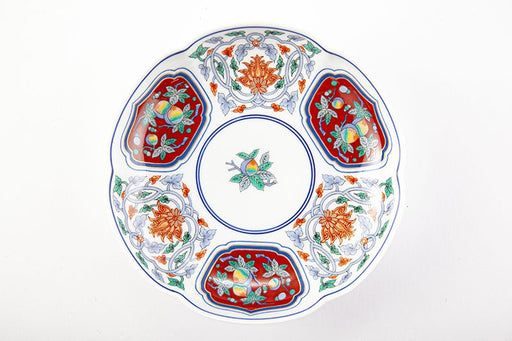 Arita, SagaShobido Honten / Kisen賞美堂本店・其泉Arita porcelain
Offers Kisen Arita porcelain, including gold-decorated Old Imari-style tableware and floral-patterned plates.
WebsiteShips overseas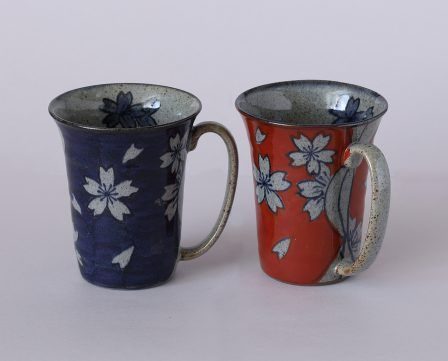 Hasami, NagasakiShohogama翔芳窯Hasami ware
Hand-painted Hasami ware featuring nature-inspired motifs on bowls, plates and cups.
WebsiteOnline shop ↗Ships overseas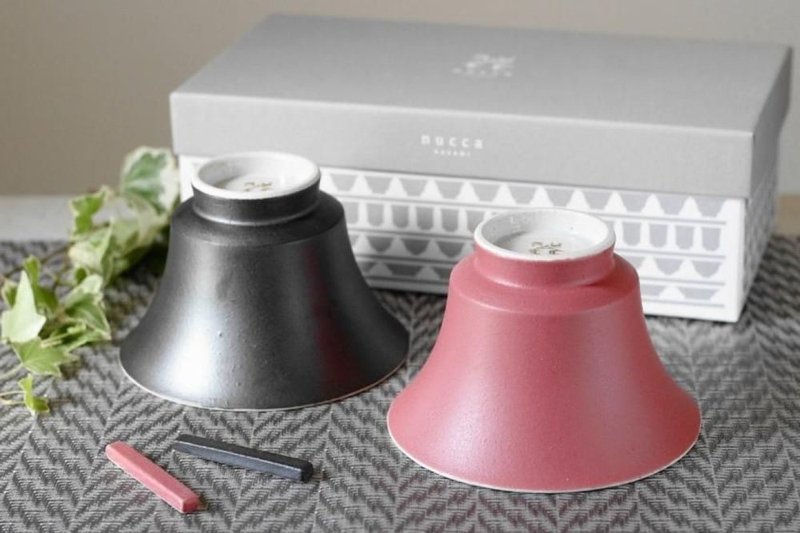 Hasami, NagasakiYamashita Pottery山下陶苑Hasami tableware
Hasami pottery made in-house from clay body preparation to firing, including the nucca brand.
WebsiteShips overseas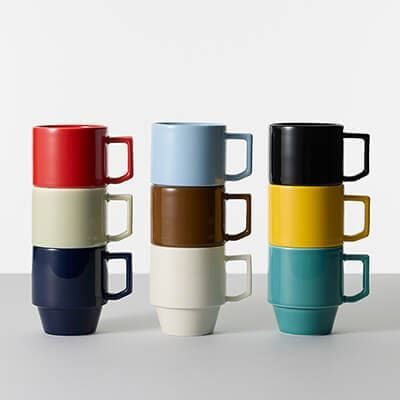 Nagasaki / HasamiMaruhiroマルヒロHasami porcelain tableware
Develops and sells Hasami ware, including HASAMI Block Mugs and BARBAR soba cups.
WebsiteOnline shop ↗Ships overseas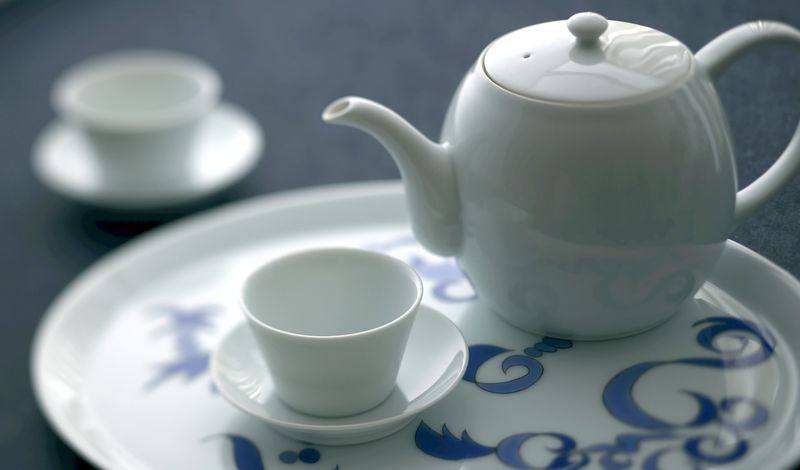 Arita, SagaFukagawa Seiji深川製磁Arita porcelain, white and blue
Produces Arita porcelain tableware, including white porcelain and blue-and-white designs.
WebsiteOnline shop ↗Ships overseas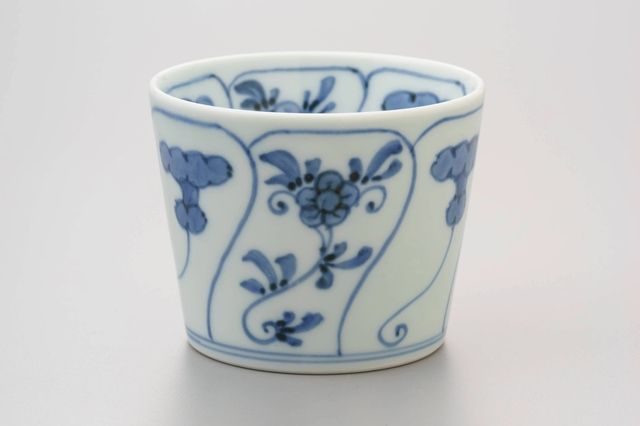 Arita, SagaKeizan Gama渓山窯Arita blue-and-white tableware
Makes Arita ware plates, bowls and other tableware featuring blue-and-white decoration.
WebsiteOnline shop ↗Ships overseas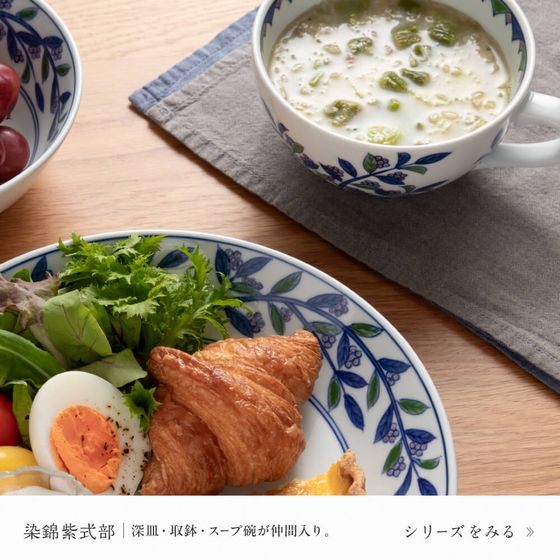 Arita, SagaGen-emon Kiln源右衛門窯Blue-and-white Arita tableware
Makes Arita porcelain tableware inspired by Old Imari designs, including blue-and-white and seasonal motifs.
Website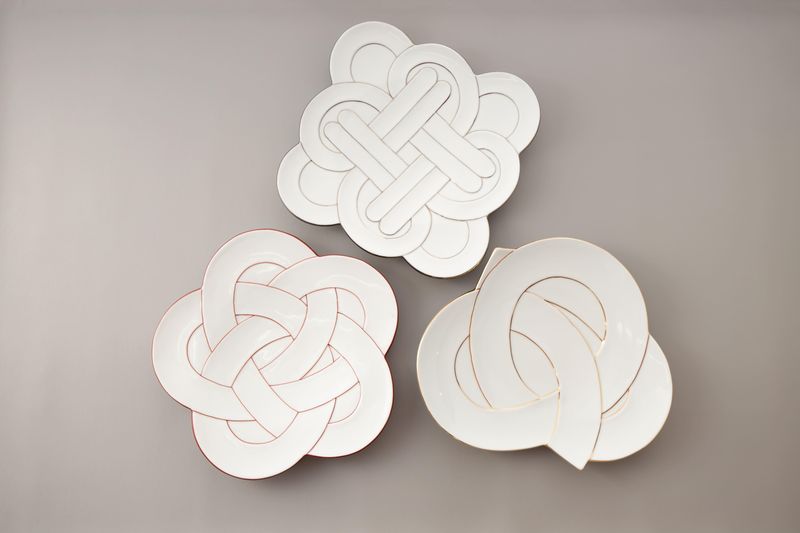 Arita, SagaTaseigama田清窯Arita porcelain
Arita porcelain tableware featuring Musubi, Five Lucky Bats and iridescent glaze collections.
Website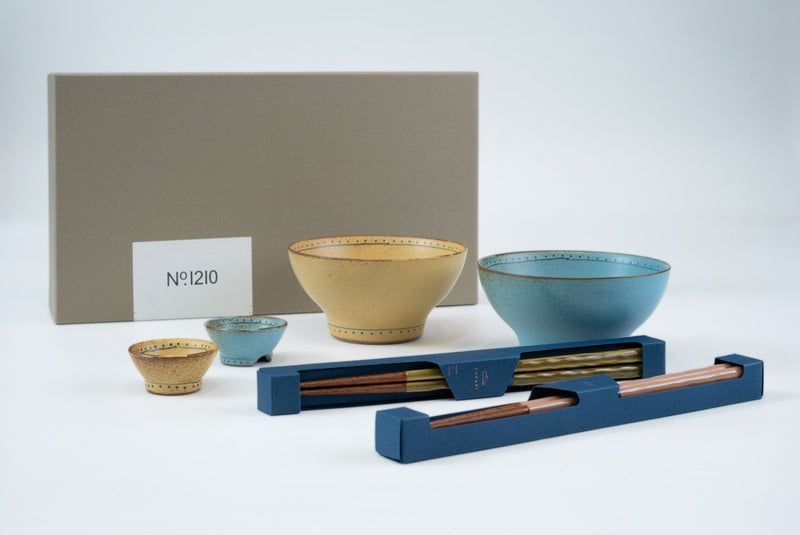 Hasami, NagasakiAizengama藍染窯Hasami ware
Hasami tableware in distinctive color collections including Ai Blue, Bronze and Mimosa.
Website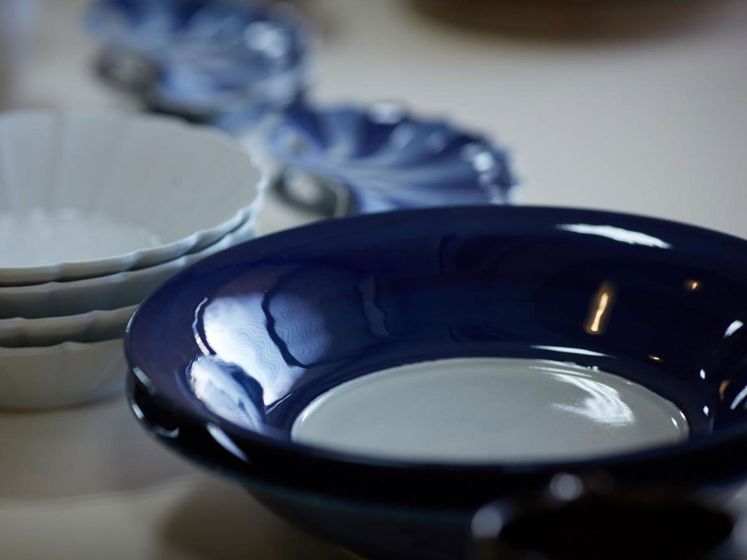 Arita, SagaZuihogama瑞峯窯Arita tableware
Arita porcelain for restaurants and everyday dining, finished with hand-painted decoration.
Website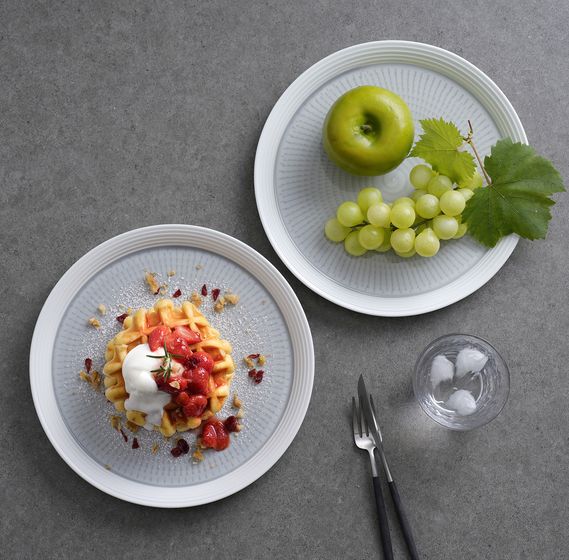 Nagasaki / HasamiIsshingama一真窯Hasami porcelain tableware
Hand-carves porcelain cups, pots and plates with varied patterns using specialized carving tools.
WebsiteOnline shop ↗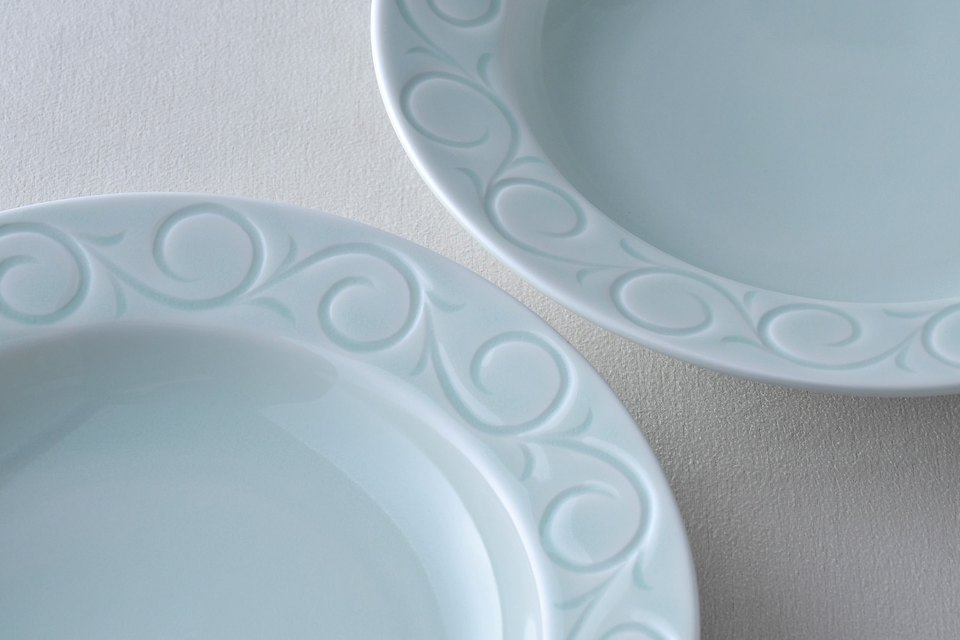 Nagasaki / HasamiShoemon-gama正右衛門窯Hasami porcelain tableware
Makes bluish-white and white porcelain, including fluted small bowls, vases and plates.
WebsiteOnline shop ↗FAQ
FAQ
What is the difference between Arita and Imari ware?
In the Edo period, porcelain from around Arita was shipped from the port of Imari and called "Imari". Today, Arita ware generally means pieces made in Arita, and Imari ware those made in Imari City.
Where can I buy Arita ware online?
Many of the kilns listed on this page sell directly through their own online shops.