How to tell authentic Japanese craft
"Made in Japan" or "Japanese style" on a label does not always mean a piece was made by a Japanese craft maker. Here is what to look for to tell the real thing.
01 The maker's name
Real craft carries the name of its maker, workshop or kiln — engraved on a knife, marked on the base of a bowl, printed on a lacquer box. Be careful with anything that cannot name its maker.
02 The place of origin
"Arita style", "Japanese style" and similar phrases do not mean a piece was made there. Look for the town or region clearly stated.
03 The Traditional Craft sticker
Products that meet the standard for nationally designated traditional crafts may carry the official dento shoshi sticker issued by the Association for the Promotion of Traditional Craft Industries.
04 Materials on the label
Wood or resin base and urushi or urethane coating for lacquerware; handmade or machine-made for washi; unglazed clay or glaze for teapots. Materials and methods explain differences in price.
05 Price
Handmade craft takes time. If the same item is extremely cheap, check where and how it was made.
06 Hold it
Weight, texture and how blades meet are hard to judge from photos. At CRAFT. in Yokohama you can handle crafts from all over Japan.
BY CRAFT
By craft
Tsubame-Sanjo
Tsubame-Sanjo products usually carry the maker's name and a "Made in Tsubame" or "Made in Sanjo" stamp or label. On clippers and knives, look at how cleanly the blades meet and how the edge is finished — it shows the care that went in.
Arita ware
Turn the piece over and look for the kiln mark or signature inside the foot ring. Anything described as "Arita style" was not made in Arita. Pieces that meet the national standard may carry the official Traditional Craft (dento shoshi) sticker.
Nanbu ironware
1) Look inside: a kettle for boiling water (tetsubin) has a bare iron interior — only the outside is lacquered. A smooth, glossy interior means enamel: that is an iron teapot (tetsu kyusu) for brewing tea, and it must not go on a flame. Check the inside even if it is sold as a "tetsubin". 2) Read the label: Nanbu ironware is made in Morioka and Oshu (Mizusawa) in Iwate, and "Nanbu Tekki" is a regional collective trademark of the Iwate Nanbu Ironware Cooperative Association. Look for the workshop name and Iwate as the origin. 3) The Traditional Craft sticker is attached to products inspected against the national standard — but not every genuine piece carries one, so its absence alone does not mean a fake. 4) Where to buy: the workshop's official shop is the safest.
Edo kiriko
"Edo Kiriko" is a registered regional trademark: only pieces hand-cut by members of the designated association in the Tokyo area can use the name. Hand-cut glass shows slight irregularities between facets and a sharper sparkle than moulded glass.
Wajima lacquerware
Japanese law requires lacquerware to be labelled with its base (wood or resin) and its coating (urushi or urethane, etc.). Check for "base: wood, coating: urushi". Only pieces made to the process set by the Wajima association may be called Wajima-nuri.
Japanese knives
1) Mark and origin: check that the blade carries the maker's or workshop's mark and the town it was made in (Sakai, Seki, Echizen, Tosa, Sanjo…). 2) Steel: look for a specific steel name such as White #2, Blue #2, VG10 or Ginsan. Be wary of vague wording like "Japanese steel" or "high-carbon steel" alone. 3) Damascus pattern: on a genuine blade the pattern comes from layered steel. A pattern that sits only on the surface, repeats exactly, or breaks off at the spine may be printed or etched — and a pattern never proves a knife is Japanese. 4) Traditional Craft sticker: forged knives from Sakai, Echizen, Tosa and others are designated traditional crafts, and inspected pieces may carry the sticker. 5) Where to buy: shops that name the maker and the town, or the workshop's own shop.
Washi
Handmade washi often keeps its natural deckle edges, and held up to the light it shows long, interwoven fibres. Machine-made paper is more uniform in thickness and fibre. Look for "handmade" (tesuki) and the place of origin on the label.
Japanese scissors
Hand-forged scissors carry the maker's stamp on the blade, and the blades are given a slight curve so they cut lightly right to the tips. They feel different in weight and balance from scissors simply stamped out of sheet metal.
Bonsai scissors
Look for the workshop's stamp and check that the tips meet exactly. Forged shears have blade and handle in one piece and keep their alignment for years. Very cheap sets often have thin blades that dull quickly.
Seki knives
Seki blades are stamped with the maker's name and usually "Seki Japan". Be cautious with knives that carry no stamp or no maker's name.
Sakai knives
Sakai knives are engraved with the name of the smith, sharpener or shop. On single-bevel knives you can often see a faint line on the face of the blade where the steel meets the soft iron. Knives meeting the national standard may carry the official Traditional Craft sticker.
Echizen knives
Echizen knives bear the mark of the workshop or smith. Hand-forged blades taper from spine to edge in a way that shows the hammer work. Check for the workshop name and "Echizen Uchihamono".
Tosa knives
Tosa blades are stamped with the smith's name, and many keep the dark forge scale (kuro-uchi finish) from forging. Check for the workshop name and place of origin.
Hasami ware
Look on the base for the kiln or company name and "Hasami ware". Since origin labelling was tightened in the 2000s, pieces made in Hasami are sold under the Hasami name.
Mino ware
Because Mino ware covers so many styles, first check for the kiln or maker name and a Gifu origin (Tajimi, Toki, Mizunami). Shino and Oribe styles are also made elsewhere, so the style name alone does not tell you where it was made.
Kutani ware
Kutani pieces are traditionally signed on the base with "Kutani" and the artist or kiln name. Hand-painted overglaze stands slightly raised — you can feel it with a fingertip — and has a depth of colour that printed transfers lack.
Bizen ware
Bizen ware uses no glaze, so anything with a glossy glaze is not Bizen. Most pieces carry the potter's seal stamped on the base or side.
Tokoname kyusu
Tokoname teapots are usually stamped with the potter's seal on the lid or base, and each lid is fitted to its own pot. Shudei is unglazed, so the clay colour runs right through to the inside.
Hagi ware
Hagi tea bowls often have a notched foot ring (kiri-kodai) and are usually stamped with the potter's seal. Check for the kiln name and a Hagi origin.
Shigaraki ware
Shigaraki clay contains white feldspar grains that rise to the surface in firing. Check for the kiln seal and a Shigaraki (Koka, Shiga) origin.
Mashiko ware
Mashiko kilns and potters usually stamp their seal on the base, and at the pottery fairs you can buy directly from the maker. Check for the kiln name and a Mashiko origin.
Takaoka copperware
Takaoka castings usually have the workshop or company name on the base. Hand-coloured finishes have a depth and slight variation that painted finishes lack.
Yamanaka lacquerware
Yamanaka makes both urushi on wood and urethane-type coatings on resin. Both are made in Yamanaka, but the label's "base" and "coating" tell you which is which. A real urushi bowl feels light and warm in the hand.
Satsuma kiriko
Because the colour layer is thick, Satsuma kiriko shows a soft fade from colour to clear along the cuts. Check that it is sold under the name of the workshop.
Ryukyu glass
Hand-blown Ryukyu glass varies slightly in shape and thickness from piece to piece. Check for the workshop name and an Okinawa origin.
Kintsugi
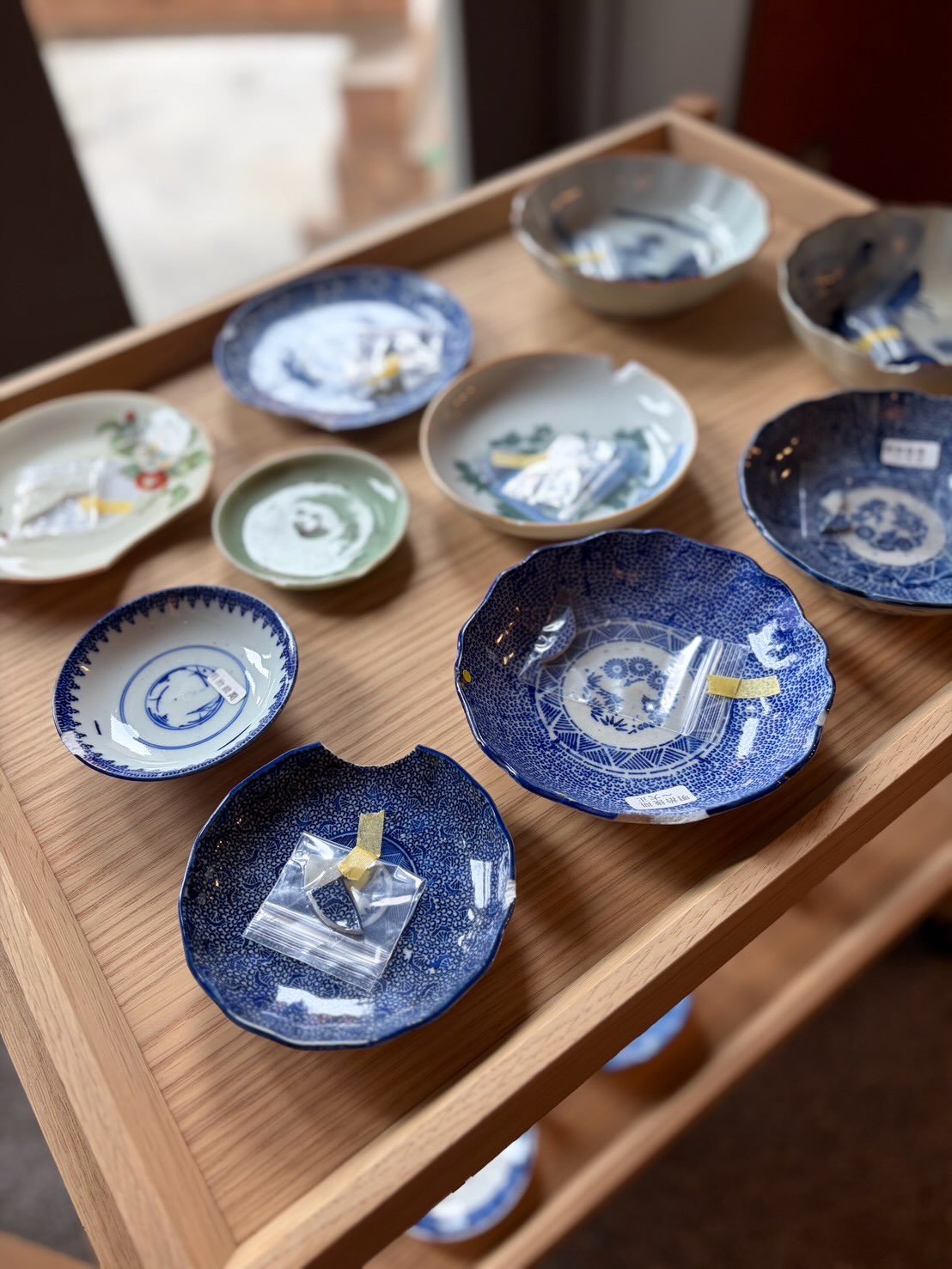
True kintsugi is done with natural urushi lacquer. When buying a kit or a repair, check whether it is real urushi or "quick kintsugi" with synthetic glue. For tableware, choose real urushi.
Imabari towels
Genuine Imabari towels carry the brand-mark tag showing they have passed the quality standard. Be wary of towels without the mark or with look-alike logos.